Teacher photographing pages of a book in a classroom

    For independent reading classrooms

    Check understanding across the books students choose

    When students read different books, the same quiz cannot tell you what each one understood. ReadCheck makes short questions from the pages you select in a student's own book. Use them for an occasional reading check-in, then follow up with a conversation about the text.

    Different books. Questions tied to each student's pages. More to talk about in the next conference.

    Keep book choice without giving every reader the same questions

    One student is halfway through a mystery. Another is reading a book about space. Both can be making progress, but a generic reading log or a quiz about the wrong chapters may tell you little about what they took from today's pages.

    You can still ask every student good questions without creating a full unit for every title. ReadCheck offers one way to prepare a brief, text-specific check when you want a closer look at a student's reading. It can sit alongside reading conferences, journals, and informal discussions.

    A two-minute independent reading check-in

    Try this when students are reading different books. Ask about the pages the student just read, and let them keep the book open.

    1. Ask for the gist. In a novel, ask what changed for the character. In nonfiction, ask what the author wants the reader to understand.
    2. Ask for one clue. Have the student point to a line, a picture, or a caption that helped them answer.
    3. Choose the next step. If the student can connect the clue to their answer, move on. If they name a detail without explaining it, reread that part together.

    For example, if a student says a character is worried, ask which action or line made them think so. Their clue gives you something specific to discuss.

    Two sample check-ins

    Two readers, two books, two useful starting points

    Reader A: a novel

    Sample quiz: Charlotte's Web

    This student brings the book and shows you the pages read since the last check-in. Photograph a short selection. Review the generated questions, then ask the student to point to a passage that supports an answer.
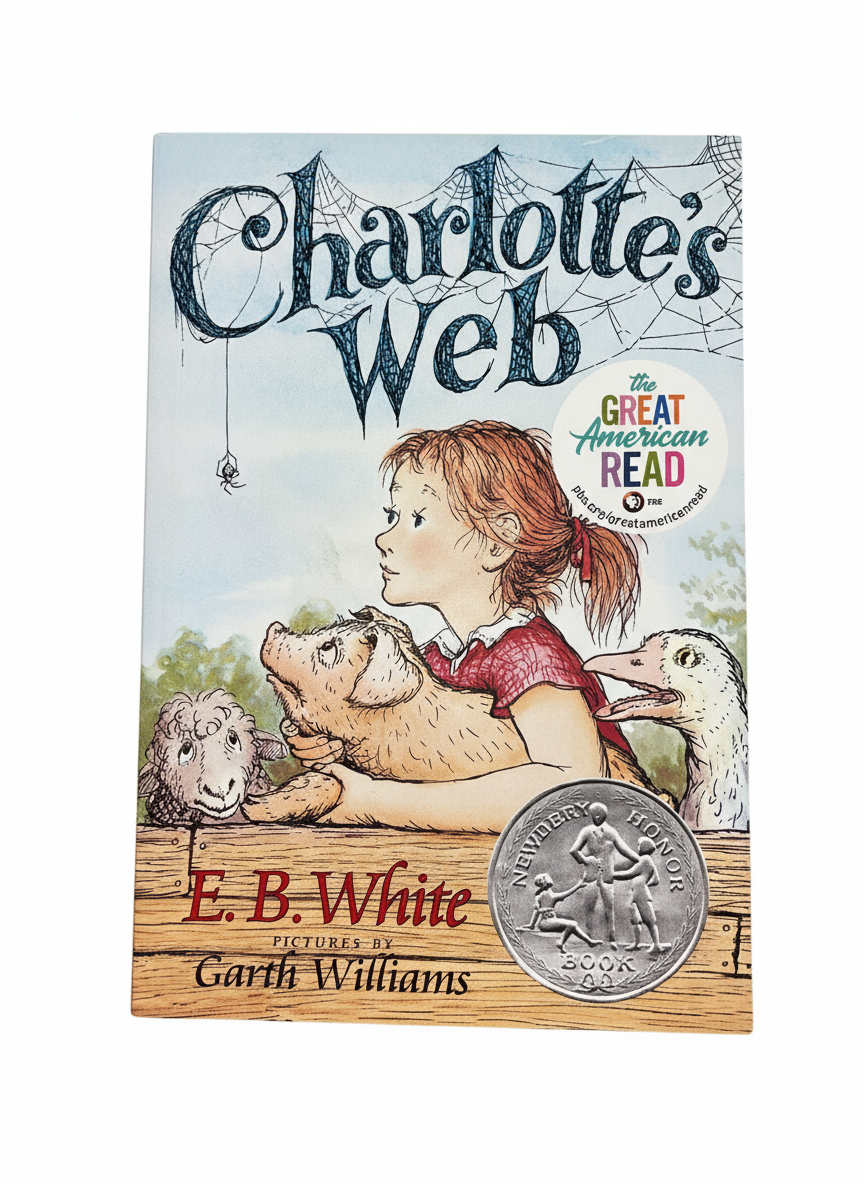
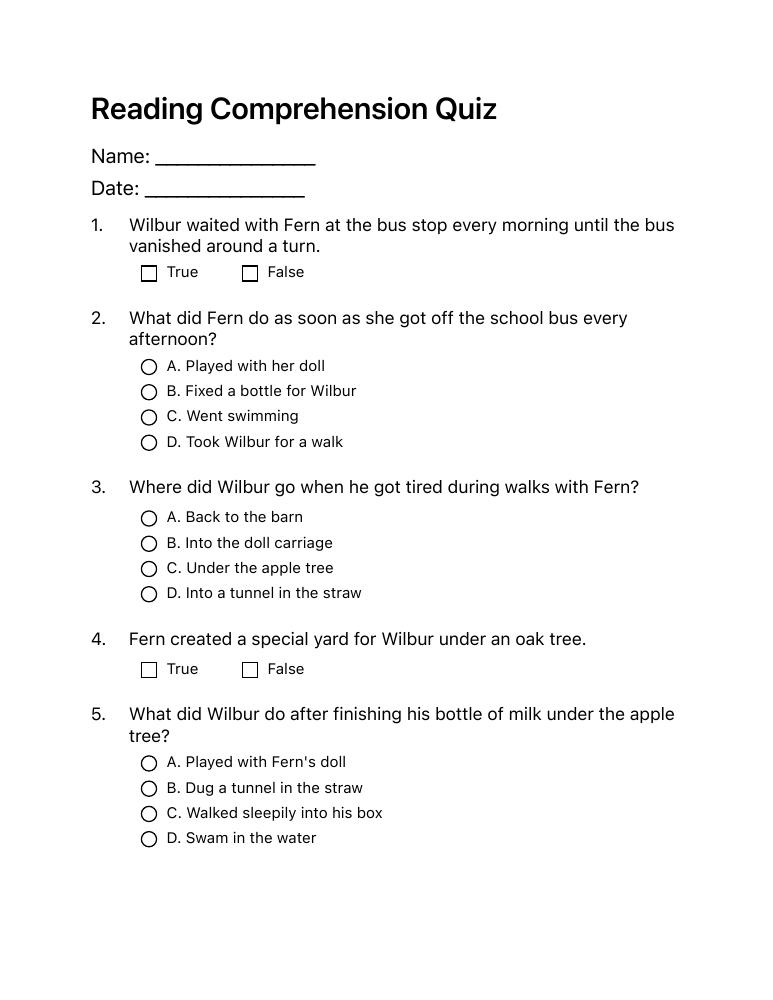
    Charlotte's Web book coverPrintable quiz for Charlotte's Web, first page

    Teacher follow-up: “Show me where you found that in your book.”

    Reader B: a nonfiction book

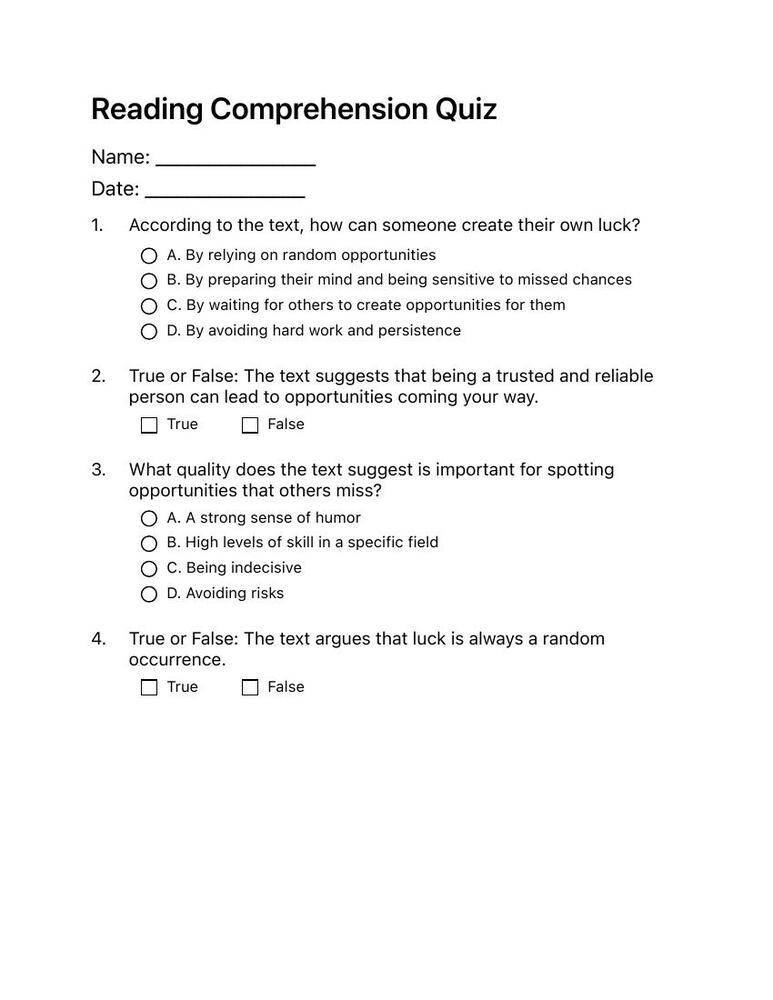
    Sample quiz: a book by Naval Ravikant

    Choose a few pages from this student's reading. Make a separate check from those pages, then use the responses to discuss a new idea or a detail the student wants to investigate further.

    a book by Naval Ravikant book coverPrintable quiz for a book by Naval Ravikant, first page

    Teacher follow-up: “Which idea here was new to you, and what would you like to find out next?”

    These are two separate quizzes, each made in its own step from that reader's pages. The book pages themselves are not reproduced here. You decide when a quiz adds value and when a conversation or written response is enough.

    Make a check-in for your student's book

    Choose the pages your student has read, photograph them in ReadCheck, and turn them into questions for your next reading conversation.

    How it works

    A check-in for the book in front of you

    01

    Start with the student's reading.

    During a conference or another planned check-in, choose a few pages the student has already read. You need the text itself, not only the title or a book summary.

    02

    Photograph the selected pages.

    Take clear photos in ReadCheck. The app generates a short quiz based on those pages. Make a separate quiz for another student's different reading when you need one.

    03

    Review and follow up.

    Compare questions and answers with the book before using them. Let the student respond on paper or in the app, then ask what in the text supports their thinking.

    Let the answers lead to a better conversation

    A quiz gives you a few concrete places to begin. When an answer is strong, ask for the evidence behind it. When a response is uncertain, reread that part together. The result is one signal about the selected pages, not a score for the student's entire book or reading ability.

    Use the questions when they help you understand this reader's experience. Keep your existing conference, journal, or discussion practices where those give you a better picture.

    Prompts after a check-in

    • “Where in your book did you find that?”
    • “What changed for the character or the main idea in these pages?”
    • “What would you like to read or find out next?”

    Paper questions for a reading conference or response

    If a written response fits your routine, print the quiz as a student worksheet and keep the answer key for yourself. The student continues reading their chosen physical book. ReadCheck supplies questions from the pages you photographed; it does not supply the book or a prewritten quiz catalog.

    Questions teachers often ask

    Can different students get questions about different books?
    Yes. Make a separate quiz from the selected pages of each student's book when you want an individual check-in. The teacher still needs access to the pages and should review each generated quiz before using it.
    Do I need to find a quiz for the exact title?
    No. ReadCheck generates questions from the photographed pages, so you can work with a student's selected reading even when there is no prewritten quiz for that title.
    Does this mean every student has to take a quiz every week?
    No. Use it selectively when a text-specific check will help. Conferences, journals, discussion, and other responses can remain part of your independent reading routine.
    Can I print an individual student's quiz?
    Yes. ReadCheck can produce a printable worksheet and answer key from the pages you supplied. Review the result against the book before giving it to the student.
    Will it assess an entire book if I photograph a few pages?
    No. The generated questions relate to the pages you provide. Use the result as a check on that selection and ask broader questions in a conference if you want to discuss the whole book.
    Does ReadCheck manage my class or grade the printed responses?
    This workflow is about making questions from selected text. Plan to handle book access, student records, and review of paper responses through your existing classroom practices.

    Whole class reading the same pages? See printable quizzes for one shared assignment, where you make one quiz for the group.

    Planning your reading routine? Read our guide to assessing independent reading when students read different books.

    Replace reading logs with a manageable check-in routine.

    Hold students accountable with a classroom agreement that preserves book and response choice.

    Manage 25 different books with a realistic conference rotation and rescheduling plan.

    Compare tools for tracking comprehension across student-selected books.

    Compare what reading logs and comprehension checks can actually show.

    Use a classroom response menu with common criteria for different books.

    Observe literature circles without taking over the discussion.

    Use reading conference questions for fiction and nonfiction, with a worked conversation.

    Let students keep their books. Meet them in the pages they read.

    Choose a student's pages, review a short check, and make the next reading conversation more specific.