A homeschool reading tracker for several children works best when each child has one goal, one short work sample and one next step. Keep a shared weekly schedule, but compare each child with their own earlier work, not with a sibling. You can create the tracker on paper or in a spreadsheet.
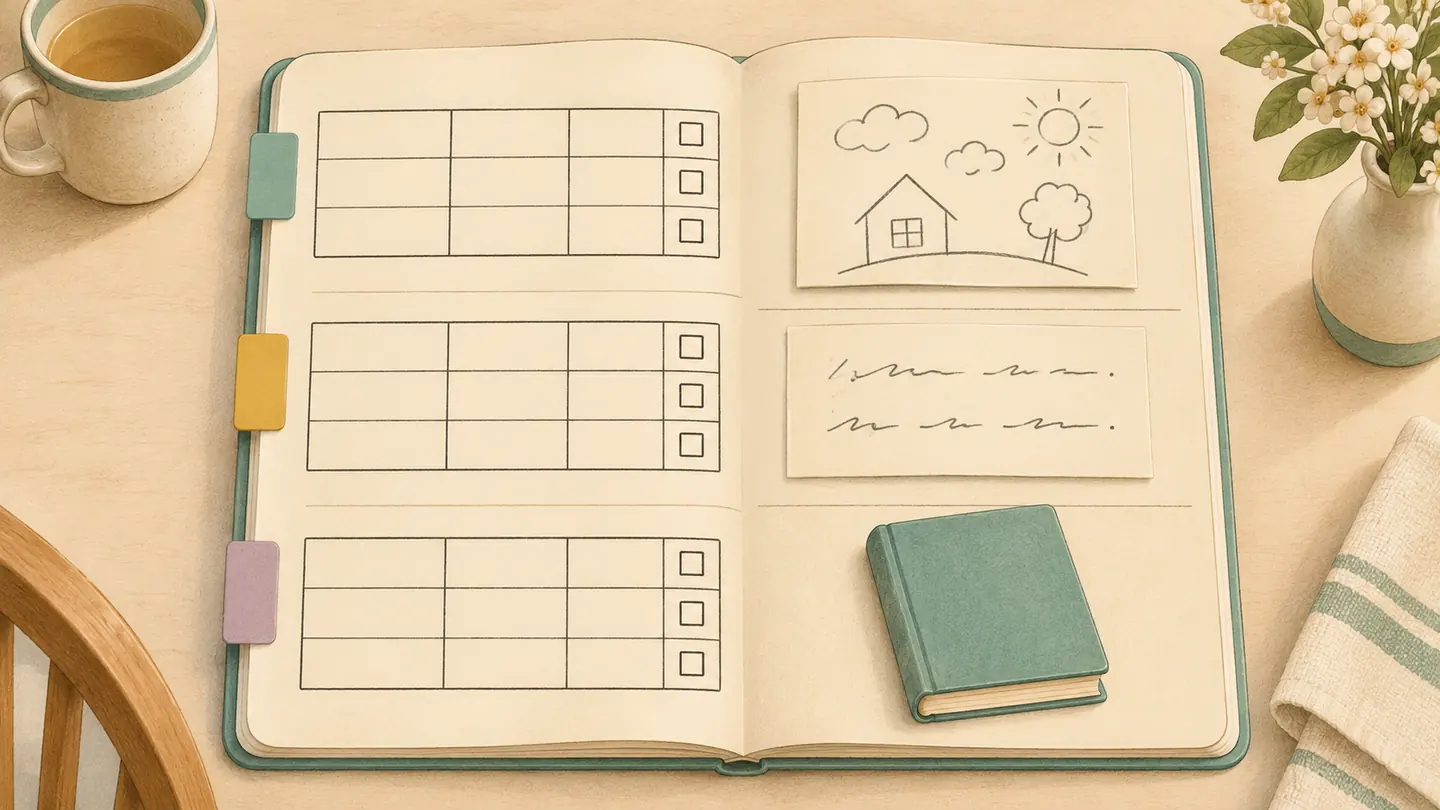
Set up one record for each reader
Use one folder or tab per child. Pick one observable focus, such as retelling key events in order or naming an idea and pointing to a clue.
Record two comparable samples: a starting sample and a later check. For each one, note the text and page span, whether the reading was independent or shared, and any supports used.
Different passages can be similar in length and kind. If the text or support changes substantially, note the change instead of treating the results like a score trend.
Copy this weekly reading tracker
Select and copy the heading row and blank row into a notebook or spreadsheet. Use a new row for a selected check-in.
Reader | Date and pages | Reading mode | Focus and prompt | What the child said, showed or wrote | Help used | Next step
[Child] | [Date; text and pages] | [Independent or shared; oral or written response] | [Focus; prompt] | [Response or sample reference] | [Support] | [One teaching move]
- Reader
- One child’s name or your family’s usual label.
- Date and pages
- The date, text and page span for this sample.
- Reading mode
- Independent or shared reading, plus an oral or written response.
- Focus and prompt
- One observable goal and the question you actually asked.
- Child’s response
- What the child said, showed or wrote, or a reference to the saved sample.
- Help used
- Read-aloud, pictures, rereading, questions or another support.
- Next step
- One teaching move to try in a later check.
Two fictional readers, two different next steps
These examples show why the useful comparison is between a child’s own samples, even when siblings share a weekly schedule.
Reader A
Short illustrated stories; an adult read aloud in both checks.
- Starting sample
- Named the ending after two questions.
- Later check
- Told the beginning, problem and ending using pictures.
- Keep visible
- The adult read aloud both times; the first check also used two questions, and the later check used pictures.
- Next step
- Try the same retelling prompt with the book open and no additional question.
Reader B
Short nonfiction passages read independently.
- Starting sample
- Pointed to a detail only after being directed to a caption.
- Later check
- Picked a clue without a prompt and explained how it supported the main idea.
- Keep visible
- Both responses were independent, but only the first needed direction to a caption.
- Next step
- Ask for the main idea and a supporting clue in another short nonfiction text.
One follow-up is a clue for planning, not a standardized assessment.
Rotate the check-ins
For example, check in with Reader A on Monday while the other children read, then Reader B on Wednesday. On Friday, scan recent notes and select one next teaching move per child.
Log notable or paired samples, not every page. Alternate lighter and deeper check-ins so the record stays useful without making every reading session a conference.
Record whether the response was oral or written, and keep the level of help visible. That context helps you interpret a later answer without comparing unlike kinds of support.
For titles and activity logs, see the homeschool reading-log-vs-comprehension-check guide. For help selecting a prompt, use the guide to assessing homeschool reading comprehension. You can also return to the homeschool hub.
Sources
The IES K–3 reading-comprehension family and caregiver activity materials provide examples of retelling and inference activities for early elementary readers. They are used here for activity examples, not as evidence of this tracker’s effectiveness or as materials for older ages.
Add a selected quiz sample to the tracker
If you want questions about the pages one child just read, photograph those pages in ReadCheck to draft a short comprehension quiz. Review it against the book, then use the quiz in the app or print a worksheet and answer key. Keep any selected sample with that child’s own tracker.